재활

체성분 및 체수분 평가는 근육 회복과 체액 변화, 전신 기능 상태를 반영하여 환자의 현재 상태와 치료 효과를 평가하는 핵심 지표입니다.

InBody활용 재활 관리 프로세스

재활 환자의 신체 상태 평가

근육량, 체지방, 체수분, 위상각을 종합적으로 확인하여 재활 환자의 현재 신체 상태를 평가합니다.

근육 회복 정도와 부종, 체액 불균형 여부를 함께 파악함으로써 기능 저하의 위험과 전신 건강 상태를 보다 정밀하게 이해할 수 있습니다.

이를 통해 환자의 회복 수준과 추가 치료가 필요한 영역을 파악하고, 개인별 상태에 맞는 재활 방향을 설정합니다.

평가

재활에서 InBody의 역할

  • 체성분과 체수분 분석을

    통한 환자 파악

    근육량, 체지방, 체수분, 위상각 등의 지표를 종합적으로 분석하여 환자의 현재 신체 상태를 객관적으로 파악할 수 있습니다. 이러한 평가는 재활 치료 시작의 기준을 제공하며, 환자 특성에 맞춘 치료 계획을 수립하는 데 도움을 줍니다.

  • 체액 불균형을 통한

    회복 경과 확인

    세포외수분비는 부상이나 재활 과정에서 나타날 수 있는 부종, 염증과 같은 증상을 잘 반영합니다.

    부위별 수치를 함께 확인함으로써 국소적인 부종 상태와 회복 경과를 보다 정밀하게 파악하는 데 도움이 됩니다.

  • 신체 기능 평가

    및 치료 과정 모니터링

    정기적인 측정을 통해 재활 과정에서의 변화 추이를 관찰합니다.

    이러한 모니터링은 환자의 회복 경과를 구체적인 지표로 보여주며, 이를 바탕으로 치료 계획을 보다 효과적으로 조정할 수 있습니다.

재활을 위한 InBody

재활 치료 효과를 향상시키기 위해서는 부위별 체성분 및 체수분 변화 기반의 정밀 평가와 맞춤형 중재가 필요합니다.

따라서 해당 항목을 제공하는 InBody580 이상의 장비를 권장합니다.

    재활에 InBody를 적용하는 방법은?

    부위별 근육 분석을 통한 근육 불균형 확인

    부위별 근육 분석을 통한 근육 불균형 확인

    부위별 근육 분석을 통해 전반적인 근육량 변화뿐 아니라 상·하지 및 좌우 근육 분포를 함께 확인합니다.

    이를 통해 근육 불균형이나 특정 부위의 근육 부족을 발견하고, 개인 맞춤형 재활 중재를 계획할 수 있습니다.
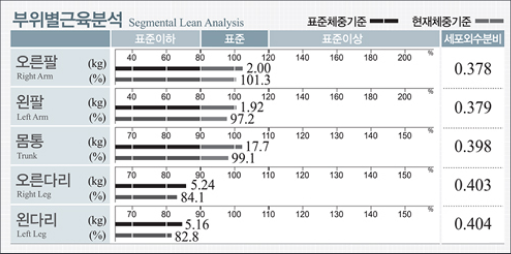
    부위별 근육 분석을 위한 결과지 화면

    부위별 근육 분석을 위한 결과지 화면

    적용장비

    부위별근육분석(바 그래프)
    • InBody970S
    • InBody770S
    • InBody580
    • InBody380
    • BWA2.0S
    • InBody S10
    부위별근육분석(인체 모형)
    • InBody380
    • InBody270S

    * 본 예시는 InBody970S 결과지를 기준으로 하며, 우측 항목은 커스터마이징 가능합니다.

    InBody 활용 재활 관리 사례

    Before
    Example Before Image
    치료후
    After
    Example After Image

    *27세 여성, 급성 폐색전증(오른다리 혈전), 재활 1개월 후 체성분 변화

    재활 환자 재활 전후 체성분 변화

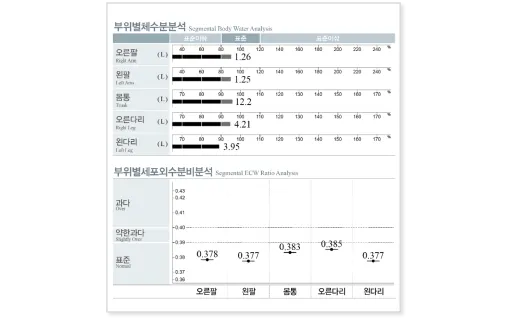
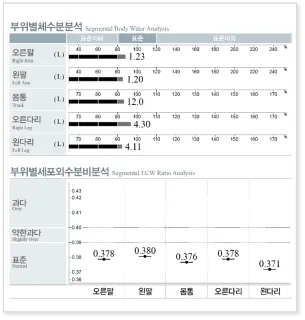
    재활 과정에서 체성분, 체수분을 확인하며 효과적인 치료 계획을 설계할 수 있습니다. 특히 세포외수분비 지표는 염증이나 부종, 순환 문제를 반영하므로 이를 바탕으로 국소부위의 상태를 파악하고 회복 경과를 모니터링할 수 있습니다.

    본 페이지는 인바디 기기를 활용하는 의료진 및 전문가를 위한 학술적 결과 해석 가이드이며, 일반적인 정보 제공을 목적으로 합니다.

    1. 본 콘텐츠는 제품의 효능을 광고하기 위함이 아니라, 기기 측정 항목이 학술적으로 어떻게 해석될 수 있는지 돕기 위한 교육용 자료입니다.

    2. 페이지 내 언급된 비만 관련 지표(BMI, 체지방률, 내장지방 수준 등)는 국제적으로 통용되는 보건 지표를 기반으로 하며, 인바디는 이를 시각화하여 모니터링을 돕는 보조적 수단입니다.

    3. 인바디는 체성분을 분석하는 기기일 뿐 특정 질병을 확정하는 진단 기기가 아닙니다. 실제 질병의 진단 및 치료 결정은 반드시 전문 의료진의 임상적 판단에 따라야 합니다.

    4. 제시된 Before/After 예시 및 연구 데이터는 특정 조건하의 사례일 뿐 모든 사용자에게 동일하게 적용되지 않습니다. 당사는 사용자가 본 정보를 임의로 해석하여 발생하는 결과에 대해 법적 책임을 지지 않습니다.

    이후 내용이 더 궁금하신가요?

    지금 바로 정보를 입력하고

    이 자료를 이어서 확인해 보세요.

    InBody 활용 논문 자료

    InBody 체성분 지표는 다수의 임상 연구에서 재활 관리 지표로 검증되었습니다.

    Appendicular skeletal muscle mass: A more sensitive biomarker of disease severity than BMI in adults with mitochondrial diseases.

    Appendicular skeletal muscle mass: A more sensitive biomarker of disease severity than BMI in adults with mitochondrial diseases.

    학술지명

    PLos One (2019)

    측정 지표

    FFMI, SMI, ASMI

    측정 장비

    InBody770

    연구 결과

    Height, weight, body mass index (BMI), FFMI, SMI, and ASMI were significantly lower in patients with MD than in healthy controls. Notably, low muscle mass was noted in 69.7% (62/89) of MD patients, with 22 patients also presenting with compromised physical performance as indicated by decreased gait speed. The study aimed to evaluate the body composition of patients with mitochondrial diseases (MD) and correlate it with disease severity. Overall, 89 patients (age � 18 years) with MD were recruited, including 49 with chronic progressive external phthalmoplegia (CPEO) and 40 with mitochondrial encephalomyopathy with lactate acidosis and stroke-like episodes (MELAS). Body composition, including fat mass index (FMI), fat-free mass index (FFMI), skeletal muscle mass index (SMI), and appendicular skeletal muscle mass index (ASMI), were examined using multifrequency bioelectric impedance analysis. Clinical assessments, including muscle strength, usual gait speed, and disease severity determined by the Newcastle Mitochondrial Disease Adult Scale score (NMDAS), were performed. The comparisons between patients group and age- and gender-matched healthy controls, as well as the correlations between anthropometric measurements, body composition, and disease severity were analyzed. Height, weight, body mass index (BMI), FFMI, SMI, and ASMI were significantly lower in patients with MD than in healthy controls. Notably, low muscle mass was noted in 69.7% (62/89) of MD patients, with 22 patients also presenting with compromised physical performance as indicated by decreased gait speed, resulting in 24.7% satisfied the sarcopenia diagnostic criteria. Disease severity was more negatively correlated with ASMI than it was with height, weight, and BMI. Subgroup analysis showed that in the MELAS subgroup, disease severity was negatively correlated with height, weight, and ASMI; whereas in the CPEO subgroup, it was only negatively correlated with ASMI and SMI. Additionally, ASMI was positively associated with muscle strength. Altogether, compared with BMI, ASMI is a more sensitive biomarker predicting disease severity of MD, both in MELAS and CPEO patients.

    MoreHelp 아이콘

    재활 분야에 InBody 도입하기

    체성분 데이터를 기반으로 재활 치료 효과를 정밀하게 관리하세요.